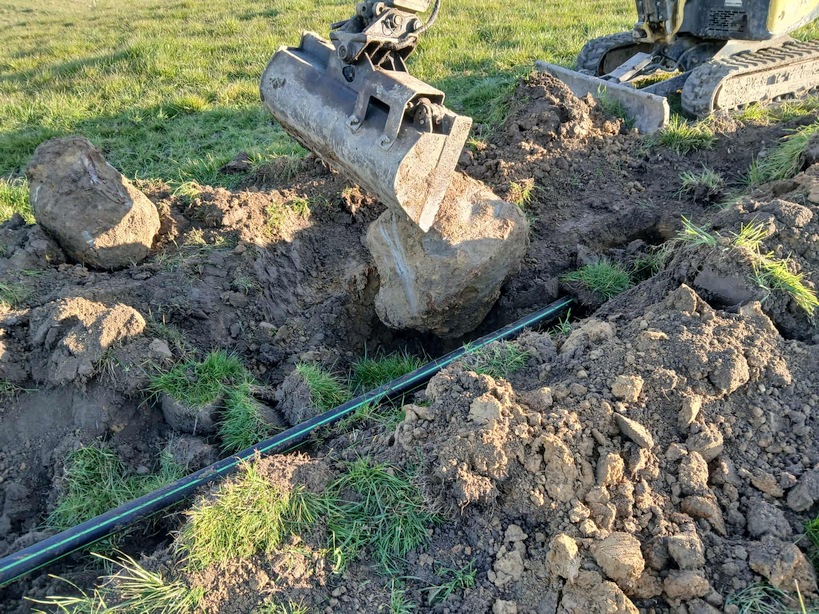
A lot of Shaun's clients live near the coast around South Canterbury. If your bore or well water starts tasting salty, your pressure drops, or you're getting muddy water, there's usually a reason. Here's what to check and what Shaun can do about it.
Why your water goes salty
In dry summer months, farms near the coast can draw heavily on old aquifers. When the water table drops, seawater can push back in. It's a natural thing that happens in coastal areas, and Shaun can't stop it. But he can help you manage it. Options include installing fresh water storage tanks so you've got a buffer, helping source water from other locations and piping it in, or getting water carted in to tide you over until the dry season passes and the aquifer recovers on its own. It's not a permanent fix, but it gets you through.
Old wells and worn pump parts
If your water pressure has dropped, you're running out of water, or you're getting muddy or gritty water, the problem might not be the source at all. It could be your well infrastructure wearing out. Common issues:
- Footer valves on pump pipes. These sit at the bottom of the well and they wear out over time. When they fail, your pump loses prime, pressure drops, and you can get sediment coming through. Replacing the footer valve is a straightforward fix that doesn't require drilling a new well.
- Submersible pump wear. Submersible pumps don't last forever. If the impellers or seals are worn, you'll get reduced flow, inconsistent pressure, or muddy water. A pump replacement can sort it out without touching the bore itself.
- Pipe degradation. Old galvanised or polythene pipes can crack or corrode underground. A small split can lose pressure and let dirt in. Tracing and replacing the damaged section usually fixes it.
Tanks full of silt and debris
Over time, water tanks can build up a layer of silt, sand, and organic debris at the bottom. This is especially common on tank-fed systems or where the source water isn't perfectly clean. Symptoms include discoloured water, blocked filters that need changing more often, or a funny taste. If you're noticing any of that, it might be time for a tank clean-out. Shaun can inspect your tank, clean out the build-up, and get your water quality back to where it should be. An inspection doesn't take long and it's a lot cheaper than ignoring it until it blocks your whole system.
Pressure tank maintenance
If your pump is cycling on and off more than usual, you get bursts of air in the lines, or your water pressure is inconsistent, your pressure tank might need attention. As a rule of thumb, drain it once a year. Check the bladder or diaphragm, recharge the air pressure to about 2 psi below your pump cut-in pressure, and you're good to go. A pressure tank that's not holding air will run your pump ragged and shorten its life.