Hiring a digger that's too small means the job takes forever. Too big and you're paying for machine you don't need, plus you'll tear up the paddock getting it in there. Here's a rough guide to help you figure out what you actually need.
Mini diggers (1 to 3 tonnes)
Good for tight spots: trenching for water lines, small drainage work, digging under or around existing buildings, or getting into places a bigger machine can't fit. If you're working around stock yards, sheds, or in a lifestyle block backyard, this is usually the right call. They're light enough that they won't chew up the ground getting to the site.
Mid-range (5 to 8 tonnes)
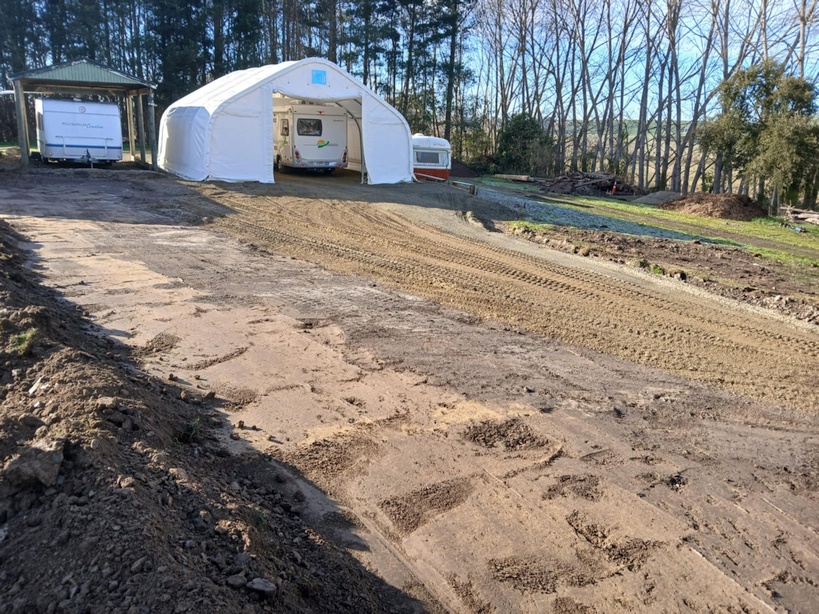
The workhorse for most farm jobs. Site cuts for shed pads, farm track construction, larger drainage channels, river clearance, and pulling out old stumps or posts. This is what I use for the majority of earthworks jobs around South Canterbury. Big enough to move real dirt, small enough to get on and off a truck without a big hassle.
14 tonne and up
For the big stuff: major earthworks, large site levelling, deep trenching for council infrastructure, or shifting serious volume. You'll need a truck and trailer to move it, and you need to think about ground conditions. On wet ground, a big digger will sink and leave a mess.
Still not sure?
Give me a call and tell me what you're trying to do. I'll tell you straight whether it's a mini digger job or something bigger. Sometimes the answer is that you don't need a digger at all, and a tractor with a bucket will do the trick for less money.